
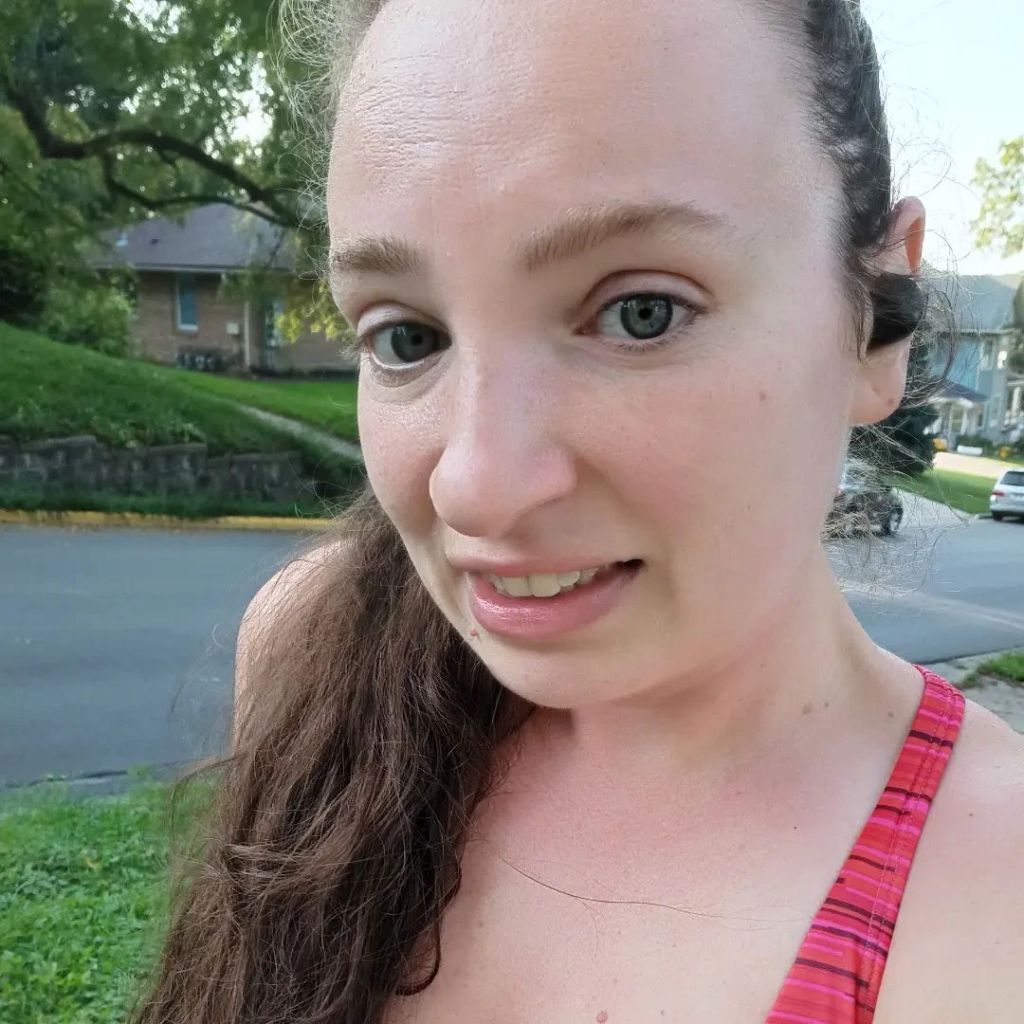
Well, I guess it is time to buy myself some new running shoes. The too-big pair I inherited from my younger sister back in high school has finally given out. What has brought me to accept this is not the fact that my big toe pokes out of one, or the fact that I graduated high school 12 years ago… No, it took me wiping out on my morning run, tripping over the talking sole of the right shoe to bring me to this conclusion.
Skinned knees aren’t as cute at 30 as they are at 3, not to mention that while my bounce back and brush off is still pretty good, I am feeling it a bit the next morning.
Who waits 12 years to replace a pair of running shoes inherited from their younger sister, you might ask? Well, that would be me. Not because I have some emotional connection to the shoes, but because I haven’t been able to bring myself to drop $$ on a new pair.
This tendency to stretch resources and avoid unnecessary spending isn’t just about the shoes—it’s a reflection of a deeper pattern in my life.
Moneysick
As I’ve been navigating the balance between saving and recognizing when it’s time to invest in what I truly need, I felt seen this week while reading Tara Schuster’s book Glow in the Fucking Dark where she recalls “I would stretch the lifespan of my socks until they are more holes than cloth (Schuster, 2023).
Schuster refers to her relationship with money at the point at time she referred to as being “moneysick” likening it to the term “dopesick”. I can relate to this relationship with money.
While I have always been more of a natural saver than spender, my journey with financial literacy has intensified this tendency into a more rigorous and structured approach to managing money.
The Initial Use
My money journey with financial literacy has been rooted in a pursuit of financial security and independence and began with the realization that I was spending beyond my means.
As I entered into my mid-twenties, I was no longer a “broke college” student, my prefrontal cortex was developed, and the free-spirited, anti-capitalist outlook on money and my relationship with it had started to nag at me. The paycheck to paycheck lifestyle was starting to weigh on me. It felt like I should be doing money…better.
While I was not getting into consumer debt or putting purchases on credit cards, I did have debt in the form of a student loans and a car loan. In my head, both of these debts were justifiable. Afterall, everyone knows school loans and college debt are “good debt”, right? And, I needed the car because I was teaching in rural Mississippi.
Although I wasn’t actively taking on more debt or putting purchases on credit cards, with my current spending habit I was not paying the debts I did have down as aggressively as I could have been, nor was I saving or investing like I should be to achieve any amount of security.
So, I started picking up a few books and tuning into a few podcasts. As I gained financial literacy, I had to confront the uncomfortable truth I’d been avoiding. I needed to save more, start investing for the future, and pay down that debt tthat was accruing interest each month.
The Budget
From what I knew and everything I heard and read, I needed a budget. Step one was to find out where my money was going and how to intentionally tell it where to go. Easy, right?
Wrong. I do not know how many of you have experienced this exact moment, but the pit I felt in my stomach when I wrote out my first budget and saw that the expense number was higher than the income number is something I will never forget.
Disappointed, hopeless, annoyed, discouraged…these are just a few of the words that describe the way I felt looking at those numbers that just didn’t math.
I wasn’t necessarily spending huge amounts of money, but l was not making very much either. Working in nonprofit education is not exactly financially lucrative. So, after pouting and complaining how life wasn’t fair and stating that I would never use a budget because it wouldn’t work for me because the math wouldn’t math. The truth behind this was that I was living above my means. I finally came around to accepting that in order to achieve all my goals of debt pay off, building up an emergency cushion and investing into the future, I needed to cut spending, and cut it big time.
Frugality 101
I was lucky to start my severe budgeting before inflation became as painful as it has been lately, but still, cutting down my spending on everything from clothes and personal products to groceries and other necessities required dedication and consistency. And I did it.
I had to cut all extras. There was no money for clothes or home decor, no coffees out, no takeout. It was bare necessities for spending, and even that was lean. And, it worked.
I’m not going to get into the details of comparison shopping for the cheapest store brand boxes of mac and cheese and cream of mushroom soup here, but I do share some pretty affordable recipes I still use as go-tos on this blog, so feel free to check those out.
Otherwise, it was just a lot of bargain shopping for the things I need, and not buying anything I didn’t. I don’t think I bought new clothes (not even socks or undergarments) for a good 3 years. Which, as told by the running shoe example above, is now sorely catching up with me (literally).
The point is, I SLASHED expenses. For the record, I have NEVER been a Dave Ramsey follower. I don’t drive a clunker, and my recipes include much more than just rice and beans. But the deeper I went into frugality, the more I found myself mastering the art of budgeting—and loving it.
The High
And I was GOOD at it. At least, that is how the high-achieving, recovering perfectionist, eldest daughter would describe it.
I was doing it all: monthly budget/spending planning, paying myself (and my debt), envelope stuffing, weekly spend tracking, comparison shopping, and daily accountability check-ins via parasocial relationships with financial lit podcasters/authors.
I had developed my ability to mask so well that I actually morphed myself from a type-b, kind of messy, hippie free spirit into a Type A budget-hacking, envelope carrying optimizer. I would literally pull out 2 different envelopes and make 2 separate purchases at a self-checkout if I was buying both groceries and shampoo. That is the level of organized I was going for. OCD kicking in on HIGH.
And it felt good. Watching my car note balance go down until the beautiful day I got the title sent to me in the mail- paid in ful- and stacking a mini emergency cushion, then stacking my student loan pay off account. Every week, the hour money date I spent with myself felt like a high. I was winning!
Now, I absolutely HATE when people make these things sound easy. If I hear one more person tell me about how they paid out of pocket for their college only to find out it was back when a full degree was, like, $10,000 or how they bought their $45,000 house and made a killing on reselling it… So, here is some of the luck, privilege and straight up good timing behind my success.
- I am so privileged to have had a very supportive partner throughout this journey. We live together, split all costs (with him contributing more due to his higher income), and he has been extremely supportive in helping me pay off my debt.
- I am also lucky that my expenses are mostly my own. No kids begging for gushers, lunchables or whatever outlandish treat kids want these days every time you go to the grocery store.
- My timing was impeccable- well, as impeccable as it can get for a millennial born in ‘93.
I decided to embark on frugality before inflation hit its high and eggs cost $4 a dozen. Also, my savings to pay off my student loans all went directly into a high yield savings account where I was earning higher interest on savings than ever because the payments were on hold due to the pandemic.
I literally made my pay off the month before interest started to accrue back on student debt. Not to rub it in too hard, but THAT felt like WINNING.
And so, if you want to roll your eyes with a “Must be nice” or “Why didn’t I think of that” , I get it. I will show myself to the trash.
If you are still with me, and do not completely hate me for my privilege, luck and good timing, you can read more about how I successfully paid off all of my debt in my My Money Journey post.
All while paying off that debt, I also got a good start on building my emergency fund, which I am still working toward fully funding, and investing for my future through my job’s 401(k).
I also realized through this slowing down, spending less that there were some things I actually enjoy more homemade, like my homemade lattes, breakfasts and date nights.
It was a success, and the success fed my competitive, high-achieving spirit, while the intense organization and intentionality draped in moral high ground (because we do associate being ‘good with money’ with morality—a story for another day) did something for my OCD.
In Detox
But, now that my debts are paid, and my savings are moving towards their goals, with retirement investments automated and growing, it is time for me to appreciate that hard work and the successes that got me this far while also acknowledging that the same habits and mindset won’t take me where I am trying to go.
One of the reasons I wanted financial security in the first place was so that I wouldn’t worry about every dollar spent or constantly think about bills and money. I wanted the freedom to feel secure in knowing that I have enough for bills and emergencies or expenses that pop up while still enjoying life.
And that means putting money into the things that bring me joy, like a new pair of quality running shoes that not only support me properly, but also do not leave me tripping over my own two feet- and treating my partner to a smoothie date on me.
After all, what’s the point of financial freedom if I can’t spend a little on the things that keep me moving forward—literally and figuratively? These small rewards aren’t just a luxury; they’re a necessary part of maintaining balance, reminding me that financial wellness is about security and the ability to enjoy life’s simple pleasures. Because celebrating milestones is how I ensure that this journey remains sustainable, fulfilling, and—most importantly—joyful.
In the end, my journey to financial wellness has been about more than cutting expenses—it’s been about redefining what money means to me. Because financial freedom isn’t just about saving every dollar; it’s about living a life that feels rich in every sense of the word.
Reference:
Tara Schuster, Glow in the Fcking Dark: A Memoir* (New York: HarperOne, 2023).
 $pent Millennial
Leave a comment