
Dear Reader,
It is ticking me off.
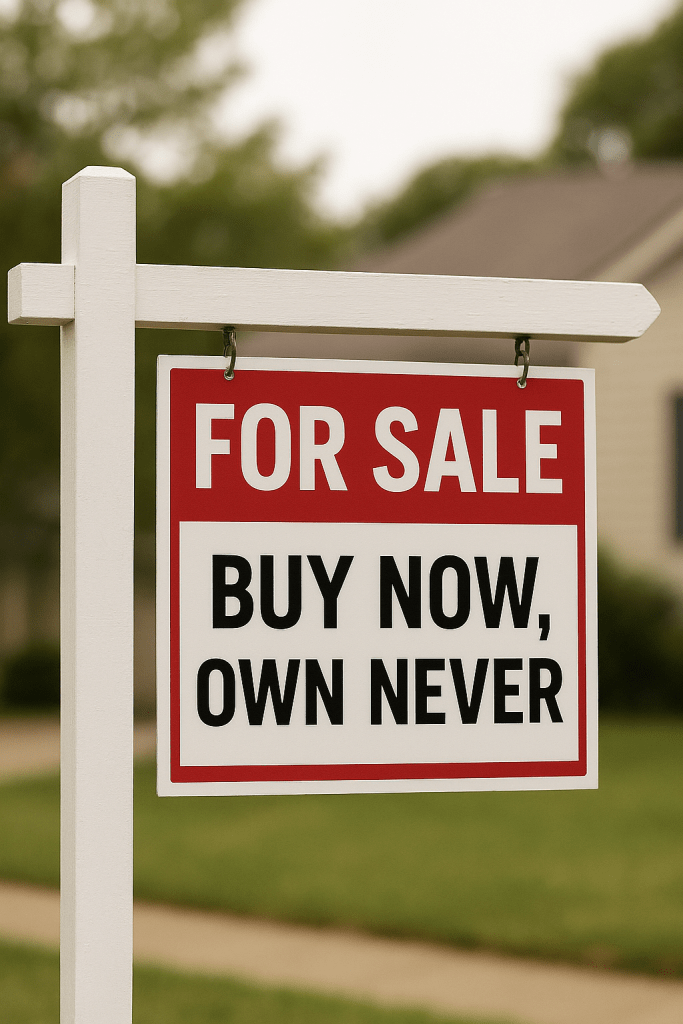
When I first heard about the proposal to introduce 50-year mortgages, I felt myself heat up with a very specific kind of frustration—the kind that comes from watching a system deceive people with short-term optics while undermining their long-term wellbeing. It wasn’t just the idea itself that bothered me, but what it signals: a willingness to stretch already strained buyers even thinner, while offering a non-solution to home prices that are inflated far beyond what’s reasonable.
A 50-year mortgage doesn’t make housing more affordable. It makes homeownership look more affordable on paper while raising the actual cost of the home dramatically. Stretching payments over half a century creates the illusion of “manageable monthly payments,” but the total interest paid becomes astronomical. And because it artificially props up demand, it risks pushing prices even higher—rather than allowing the market the breathing room it needs to correct.
And then there’s the timeline itself. Fifty years. That’s not just a mortgage; that’s a lifetime commitment. It delays meaningful equity-building for decades. It puts people in a position where they’re still paying off the roof over their head long after they’ve hoped to be retired. It’s hard not to see this as predatory—appealing to buyers who may not fully understand the implications, preying on the very human desire to “finally get a house,” even when the math doesn’t support it. Everyday Americans carry the burden while banks collect interest for an entire generation.
But this proposal also fits into a larger pattern—one that goes beyond real estate. We are living in a world where “buy now, pay later” has become the default, not the exception. We’re constantly invited to stretch ourselves thin for the sake of immediate gratification. And while rising costs are very real and very heavy, some of the problem rests in our culture’s shifting relationship with waiting, saving, and wanting.
I think about this often. I remember being a kid, trailing behind my dad at the store as he placed something on layaway. There was no swipe-and-go. No instant dopamine hit. We’d make small payments, little by little, until the day finally came when we could bring whatever it was home. And honestly? It felt magical. The waiting amplified the joy. The anticipation made the item more meaningful. We stretched the excitement across weeks instead of burning through it in one moment.
That lesson of delayed gratification has served me far beyond childhood. It taught me how to save, how to plan, and how to appreciate things more fully because I invested time and intention into them. It taught me that some things are worth waiting for.
Which brings me back to these 50-year mortgages. We don’t need a longer loan to make houses accessible. We need patience. We need the discipline to save for down payments and closing costs, to run the numbers honestly, to stay grounded in what we can actually afford. And we need to let the housing market correct itself—because these homes are not worth what they’re being listed for, and sellers will eventually have to reckon with that reality, even if it’s uncomfortable.
I’m not a real estate expert, and I’m certainly not an economist. But I am someone who cares deeply about financial wellbeing and about helping people avoid traps disguised as opportunities. So while I can’t tell you what to do, I can tell you this: I hope you run far, far away from a 50-year mortgage. And I hope the idea itself fizzles out before it can do real harm.
Until next week—take care,
Everett
P.S. Although I actually LOVE math. I have not laid out the actual math of the 50-year mortgage here because there are so many wonderful sources that already have. Check out YoutTube for HerMoney or other financial literacy and real estate channels to see what running the numbers on a 50-year mortgage actually looks like.
 $pent Millennial
Leave a comment