
Dear Reader,
Nobody cares what you deserve.
This week, during a Women United meeting hosted at our local United Way, the facilitator gestured toward a box of fancy donuts on the table and said, “I just felt like we all deserved a special treat.”
We agreed as the conversation drifted into lighthearted, post-meeting “girl talk” about dating and mother-in-laws. Then, all too quickly, it slid into something heavier. Conversations about ICE raids. International relations. The familiar, stomach-dropping sense that we are living through warnings we’ve seen before—patterns repeating themselves while those in power look away, dismiss, or actively silence concern.
When the lingering conversations finally dissolved, and we filtered out—back to our days, our jobs, our responsibilities, as we all seem to do lately, regardless of how dystopian the backdrop feels—I realized I had a few hours before my next commitment.
So I stopped at one of my favorite cafés down the street.
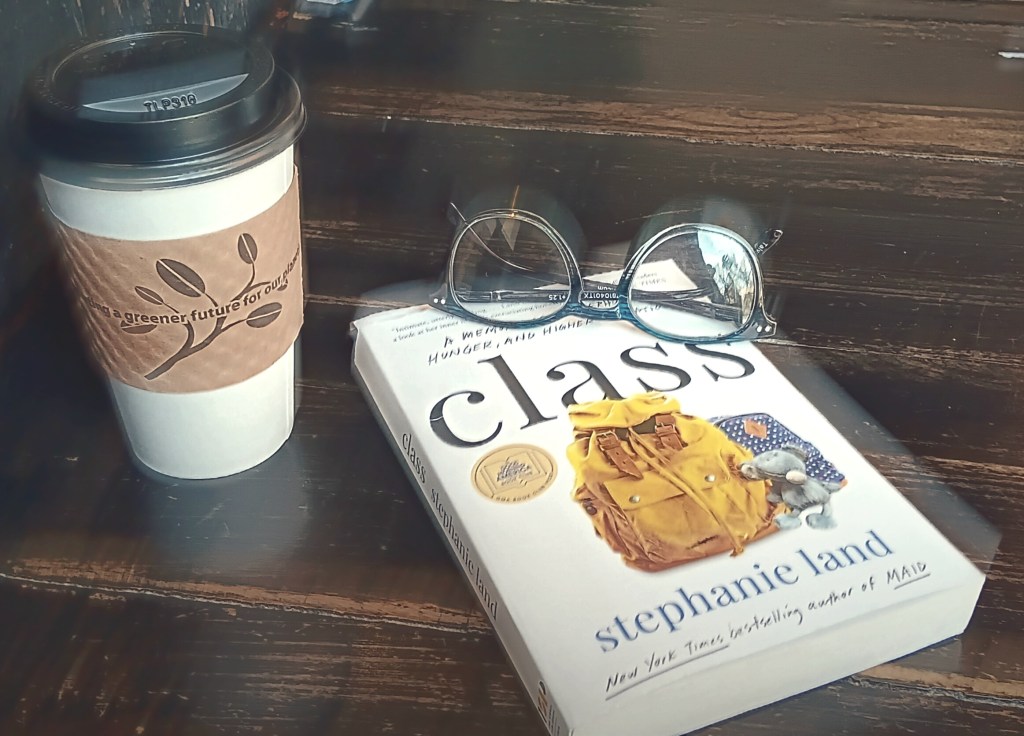
I ordered a seasonal cranberry chai latte and settled into a table by the window. I pulled out my Chromebook and notebook, not entirely sure what I planned to work on, but feeling a quiet obligation—a sense that I should be producing something, tending to something, making the time count.
I laid everything out, stared for a moment, then reached back into my bag and pulled out the book I’ve been reading: Class by Stephanie Land.
I paused.
I couldn’t spend a Thursday morning sitting in a café just… reading. Could I?
I set the book aside. Then I paused again.
Couldn’t I?
After all, wasn’t this—this time, this freedom, this unstructured slowness—exactly why I had intentionally pulled back from a job where the pace was relentless, where every day felt like a sprint toward nowhere in particular?
So I did.
Still, as I read, I couldn’t fully silence the voice in the back of my head asking how this reading might count for something beyond pleasure. Maybe it could be research. Inspiration. Preparation for a role I’ve applied for and am still waiting to hear back about.
Determined not to let that voice steal the moment entirely, I tried to stay present in the simple joy of reading—but found myself half-aware, distracted, checking the time. Not because I needed to be anywhere, but to make sure I hadn’t crossed some invisible line into indulgence. Into taking too much time to read, just to read, on a random Thursday morning in January.
And as I read Land’s account—her navigation of poverty, bureaucracy, and deeply entrenched systemic injustice—I noticed something uncomfortable rising to the surface.
Judgment.
Mild, quiet, but undeniable.
As she described pursuing a writing degree—later dreaming of an MFA—while struggling to feed herself and her daughter, I found myself bristling. Reading her anger at the systems that failed her, I struggled to suppress a thought that embarrassed me even as it formed:
What an impractical, irresponsible indulgence that kind of education seemed to be.
For anyone. But especially for someone living with such acute instability.
It’s not a thought that aligns with how I see myself—as compassionate, values-driven, aware. And yet, there it was. Persistent. Insistent.
As I read the very pages where she raged—rightfully—against the structural inequities that boxed her in, I tried to reframe, to soften, to interrogate my own thinking. But every version of the thought circled back to the same question:
Who was she to invest in herself and her dreams in that way—for something so “frivolous”— when she had such heavy and pressing responsibilities?
And then, inevitably, my eyes flicked to the clock again. And the thought turned on me.
Who was I to be sitting in a café, chai latte in one hand and her published, award-winning book in the other?
And I wondered:
Could she have told her story without the overpriced education? Maybe.
Did she need the encouragement, the network, the social capital, the permission—to turn her lived experience into something the world would listen to? Probably.
Whatever the case, the question I kept returning to stayed the same.
Who was she to devote time, money, energy, and hope to that path?
And who was I to deserve this ease? This quiet. This expensive drink and borrowed morning, reading her story at nearly the same age she was surviving it?
But here’s the thing.
None of it actually matters.
Whether she deserved to pursue that education matters no more than whether she deserved the hardships she was forced to endure. And whether I deserve the time, stability, and financial cushion to sit in a café reading her story matters just as little.
Because the truth is: deserving has very little to do with what we’re given—or what we’re denied.
We live in a society, and a generation, obsessed—often to our own detriment—with deciding what people deserve. Comfort. Rest. Struggle. Joy. Small treats. Big dreams.
And yet, nobody really cares what we deserve. Least of all the systems that shape our lives.
So this week, as you navigate hard things and soft ones alike—whether you’re reaching for a small treat, investing in a big dream, or simply trying to make it through the day—remember this:
Nobody cares what you deserve.
And maybe that’s freeing.
All we can do is play the hand we’re dealt as thoughtfully and humanely as we can. Invest where we’re able. Rest when we can. Finding moments of joy where they exist—without asking permission.
I truly hope you find small treats, quiet indulgences, and a little frivolous joy along the way.
Until next week – take care,
Everett
 $pent Millennial
Leave a reply to serendipitouslyspeaking Cancel reply